Minnesota gives riders a short season. Build the policy for all twelve months.
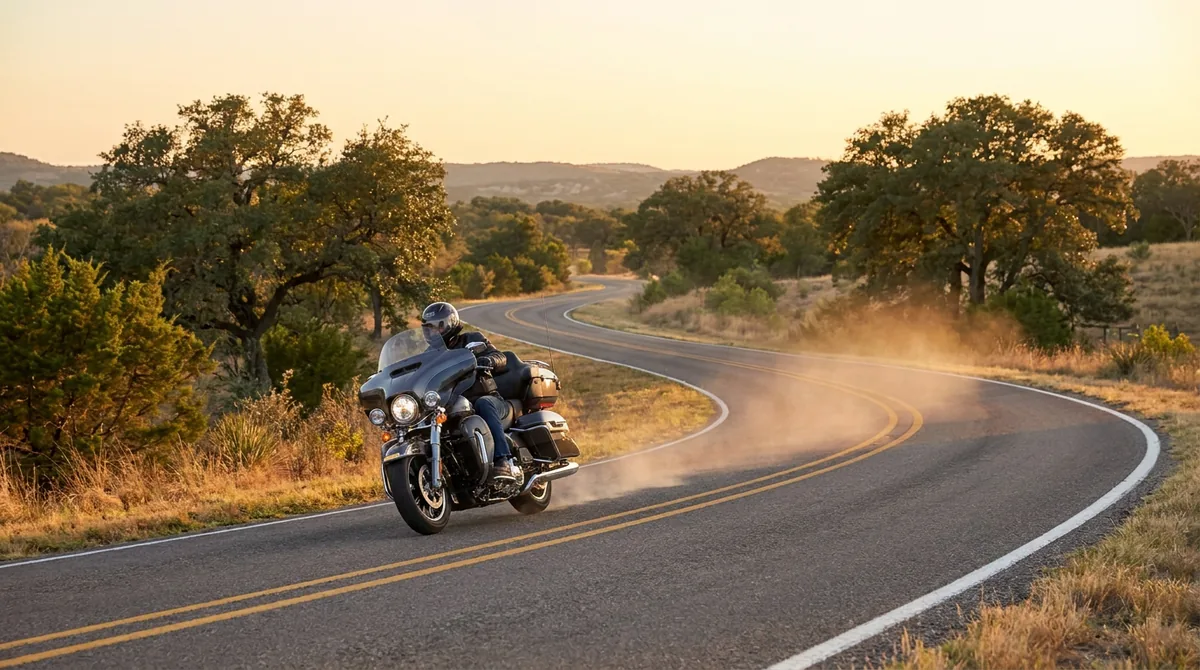
Riding here is a seasonal sport. Roughly April through October, Minnesota riders make the most of every dry weekend: river roads along the Mississippi and the St. Croix, lake runs up north, evening loops through the south metro. Then the bike goes into the garage for winter. A good rider policy is built for both halves of the year: real protection on the road, and a lower-cost lay-up option while it's parked.
Now the part that shapes every recommendation on this page. Minnesota's no-fault system covers cars, not motorcycles. The law excludes motorcycles from no-fault and requires 30/60/10 liability on a bike. In a car, your own PIP pays up to $40,000 of injury-related losses no matter who caused the crash. On a motorcycle, PIP isn't required, so the coverage that pays for your injuries is whatever you choose to add. That's why we build the injury side of a rider policy first, starting with uninsured/underinsured motorist coverage for the roughly 1 in 9 Minnesota drivers carrying nothing at all.
Minnesota's rider rules are simple to state. Helmets are required for riders under 18 and anyone riding on an instruction permit; eye protection is required for every operator, whatever your age. Past 18, the helmet is your call. But in 2022 Minnesota recorded 82 motorcycle deaths, the most since 1985, and about two-thirds of the riders killed weren't wearing one.
The rest is making the policy match the bike you actually ride: custom parts coverage above the small default, safety apparel for the gear, guest passenger liability if anyone rides with you, and comprehensive against theft, fire, and Minnesota hail, on the road and in storage. One call, bundled with the car and the house, and it is usually cheaper than riders expect.