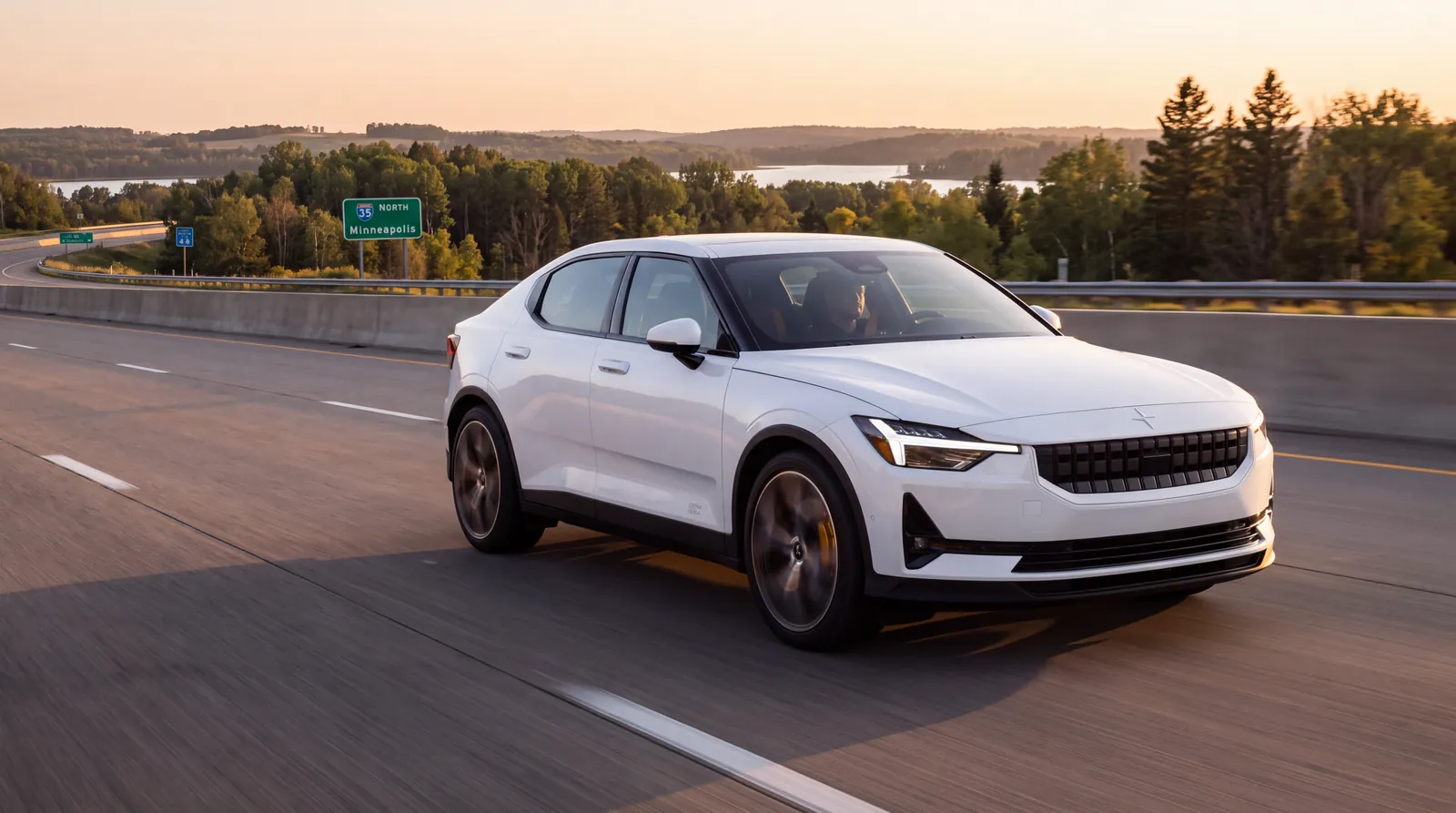
A car on a Minnesota highway at sunset
Home / Auto Insurance

Minnesota Auto Insurance: Built for the roads you actually drive.

Coverage sized past the 30/60/10 state minimum, quoted around your cars, your drivers, and your commute by a local Farmers Insurance® team in Eagan.

30/60/10
MN Minimum Liability
$40K
No-Fault PIP Minimum
1 in 9
MN Drivers Uninsured
15 min
To Start Your Quote
The Quick Answer

Minnesota is a no-fault state. Every auto policy must carry 30/60/10 liability, $40,000 of personal injury protection ($20,000 medical, $20,000 non-medical), and 25/50 uninsured and underinsured motorist coverage. The minimum keeps you legal, but liability still follows you: once injuries cross the state's tort threshold, the other driver can sue, and $10,000 of property damage coverage doesn't go far. For most drivers the right policy is liability sized to your assets, UM/UIM raised to match (about 1 in 9 Minnesota drivers is uninsured), and collision plus comprehensive on any car you couldn't replace out of pocket: comprehensive for deer and hail, collision for the winter slide-off. Across the river, Wisconsin is an at-fault state with 25/50/10 minimums. Bundling auto with home or renters can also earn a multi-policy discount, where available. Block Agency, a local Farmers agency in Eagan, quotes it all for free at (651) 252-6655. It takes about 15 minutes to get started.

MN minimum liability
30/60/10
Fault system
No-fault, $40K PIP required
Also required
UM & UIM, 25/50 each
Free quotes
(651) 252-6655
Minnesota Auto Insurance, The Short Version

The state minimum gets your car registered. It doesn't protect what you've built.

Minnesota requires 30/60/10 liability limits: $30,000 per injured person, $60,000 per accident, and $10,000 for property damage. Those numbers run out fast in the world you actually drive in. A $10,000 property damage limit won't cover much of a late-model car, a short hospital stay can pass six figures, and a winter chain-reaction on I-35E can involve several vehicles before anyone stops sliding.

Here's the part most drivers miss: Minnesota is a no-fault state, but no-fault isn't no-liability. Your own PIP pays up to $20,000 of your medical bills and $20,000 of other losses like lost income, no matter who caused the crash. But once someone's medical bills pass $4,000, or the injury is permanent, disfiguring, or disabling for 60 days or more, they can sue the driver who caused it. Property damage is never no-fault. Your liability limits are still the wall between an accident and everything you own.

That's why we don't start with "what's the cheapest policy." We start with what you have to protect, then build the coverage to match: liability limits that fit your assets, collision and comprehensive for the cars themselves (comprehensive for deer and hail, collision for the icy-morning slide into a guardrail), UM/UIM raised past the 25/50 minimum for the roughly 1 in 9 Minnesota drivers carrying nothing at all, and add-ons like rental and gap only where they earn their keep. Then we look for ways to make it affordable, like bundling with your home. We offer a free coverage review before your renewal — just ask, or we'll reach out. As a Farmers agency we can also shop additional carriers when Farmers isn't the right fit.

Want a ballpark first? Try the auto rate estimator, then call us for your real number. It's one free conversation, and it takes about 15 minutes to get started.

What Minnesota requires. And what we actually recommend.

Minnesota requires more than most states: 30/60/10 liability, $40,000 of no-fault PIP, and 25/50 UM/UIM. Collision and comprehensive are optional under the law and essential on any car you would need to replace.

Required by law
$30k / $60k

Bodily Injury Liability

Pays for injuries you cause to other people: $30,000 per person, $60,000 per accident. No-fault covers the first layer of everyone's own medical bills, but serious injuries can still be pursued against you, which is why we rarely recommend stopping at the minimum.

Required by law
$10k

Property Damage Liability

Pays for damage you cause to other people's property: their car, their fence, their garage door. No-fault never applies to property damage, and $10,000 doesn't go far against a late-model vehicle, so a claim above the limit becomes your bill.

Required by law
$40k PIP

Personal Injury Protection

Minnesota's no-fault core. Pays your own medical bills (up to $20,000) and non-medical losses like lost income and replacement services (up to $20,000) for you and your passengers, no matter who caused the crash. It's the first coverage that pays when anyone in your car is hurt.

Required by law
UM / UIM

Uninsured & Underinsured Motorist

Covers you and your passengers when the at-fault driver has no insurance or not enough. Minnesota requires at least $25,000/$50,000 of each. About 1 in 9 Minnesota drivers is uninsured, so we usually recommend raising it to match your own liability limits.

Strongly recommended
Collision

Collision Coverage

Repairs or replaces your own car after a crash, regardless of fault, including the winter slide into a ditch, a guardrail, or the car ahead. Required by every lender on a financed or leased vehicle, and worth carrying on any car you couldn't comfortably replace out of pocket.

Strongly recommended
Comprehensive

Comprehensive Coverage

Covers damage that isn't a crash with another car or object: deer, hail, theft, broken glass, vandalism, fire, and falling branches. In a state where a single 2023 hailstorm caused more than $1 billion in damage, this is the quiet workhorse of the policy.

Not covered
App On

Rideshare & Delivery Driving

Minnesota law lets personal auto policies exclude coverage while you're logged into a rideshare app, and delivery driving is commonly excluded too. A rideshare endorsement closes the gap for a modest premium. If the app is on, you need it.

Not covered
Your Stuff

Belongings Inside the Car

A laptop stolen from your back seat is not an auto claim. Personal belongings are covered by your home or renters policy, another reason the bundle works.

Not covered
Wear

Wear, Tear & Breakdown

Insurance covers sudden, accidental loss, not maintenance. Worn brakes, blown engines, and aging batteries belong to a warranty or a mechanical breakdown plan, not this policy.

The required coverages keep you legal. The right limits protect you.

We'll build the right stack for your cars and your assets, and check the discounts you may qualify for. Free, and about 15 minutes to get started.

Coverage Basics

How a Minnesota auto policy actually works.

An auto policy is really a stack of separate coverages, each answering a different question. Here's the plain-language version of what each layer does, and how we size it.

Liability: the coverage that protects everyone else, and you

Liability is the legally required core. Bodily injury liability pays for injuries you cause to other people, and property damage liability pays for the cars and property you damage. No-fault doesn't erase that exposure: once the injured person's medical bills pass $4,000, or the injury is permanent or disabling for 60 days or more, they can sue for pain and suffering. Minnesota uses modified comparative fault, so you can recover only if your share of the blame isn't greater than the other driver's. When a claim exceeds your limits, you're personally on the hook for the rest.

Our rule of thumb is simple. Your liability limits should reflect what you have to lose, not what the state requires. For most homeowners we quote 100/300/100 or higher, and for families with meaningful assets we pair auto liability with an umbrella policy, which adds $1 million or more of protection across home and auto and is often affordable relative to the protection it adds.

Collision and comprehensive: the coverages for your own car

Liability never pays for your own vehicle. That's the job of collision and comprehensive, together often called "full coverage." Collision handles crash damage, whether you hit another car, a pole, or slide off an icy ramp into the ditch. Comprehensive handles nearly everything else: deer, hail, theft, vandalism, glass, fire, and falling branches. One Minnesota detail worth knowing: hitting a deer is a comprehensive claim, but swerving to miss it and hitting a tree or another car is usually a collision claim.

Both come with a deductible, the amount you pay before coverage kicks in, and the deductible is your main pricing lever. Raising it from $500 to $1,000 can trim the premium meaningfully if you have savings to cover the difference. On an older car worth a few thousand dollars, it's also fair to ask whether collision still earns its premium at all. We'll run that math with you honestly, even when the answer lowers our own commission.

PIP and uninsured motorist: the coverages for your own injuries

Your own injuries are handled first by your personal injury protection: up to $20,000 of medical bills and $20,000 of lost income and other non-medical losses, no matter who caused the crash. When the other driver is at fault and has no insurance or not enough, uninsured and underinsured motorist coverage steps into their shoes. Minnesota requires 25/50 of each, but with about 11.3% of Minnesota drivers uninsured, we usually size UM/UIM to match your own liability limits.

Wisconsin drivers: different rules across the river

Wisconsin is an at-fault state, so there's no PIP requirement. Drivers there need 25/50/10 liability and 25/50 uninsured motorist coverage. Underinsured motorist is optional, but if you buy it the minimum is 50/100. Like Minnesota, Wisconsin bars recovery if you're more at fault than the other driver. Block Agency is licensed in Wisconsin, so we build Hudson and River Falls policies to Wisconsin rules.

The add-ons: useful, but only where they fit

The remaining pieces are situational, and this is where a real agent earns their keep instead of a checkout page upselling everything:

  • Rental reimbursement pays for a rental car while yours is in the shop. Cheap, and worth it for anyone who can't be without a car for two weeks.
  • Roadside assistance covers tows, jump starts, and lockouts. Worth having for a January dead battery; skip it if you already have a roadside membership.
  • Gap coverage pays the difference between what you owe on a loan or lease and what the car is worth if it's totaled. Essential on new cars with small down payments; unnecessary once the loan balance drops below the car's value.
  • Rideshare endorsement extends coverage for Uber, Lyft, and delivery driving. Minnesota sets coverage rules for rideshare periods but lets personal policies exclude them entirely, so if the app is on, you need this. Driving for your own company is different again, and needs commercial auto.

None of this needs to be memorized. Bring us your renewal, tell us how you actually use your cars, and we'll walk the stack together, line by line, in plain English.
Not sure what your current policy actually covers?

Send us your declarations page. We'll read it with you, flag the gaps, and quote the fix. No pressure, no jargon, and about 15 minutes to get started.

Seven honest ways to lower your Minnesota premium. Without gutting your protection.

The two biggest levers are bundling with home or renters and a free coverage review before your renewal, on request. The rest stack on top. The one move to avoid is cutting liability limits.

1

Bundle auto with home or renters

The single most reliable discount we see. Pairing your auto policy with a home or renters policy can lower both premiums, where available,, and it puts your whole plan under one roof with one team who knows the full picture.

2

Ask for a free renewal review

Minnesota allows credit-based insurance scores, with limits: credit can't be the only factor, and you can ask to be re-scored up to twice a year. Your record, ZIP, vehicle, and drivers move the price too, and all of it changes over time. One call re-checks your rate, your discounts, and your coverage, and if Farmers isn't the best fit for your profile, we can also shop additional carriers.

3

Raise your deductible, if your savings can cover it

Moving collision and comprehensive deductibles from $500 to $1,000 usually cuts those line items noticeably. The right deductible is the biggest number you could pay tomorrow without wincing.

4

Drop collision on cars that no longer justify it

When a car's value drops to a few thousand dollars, collision coverage can cost more over a few years than the car would ever pay out. We'll tell you when it's time, even though it lowers your bill with us.

5

Keep a clean record, and keep it cheap

Tickets and at-fault accidents can follow your rate for years. Slow down for the first snow, leave extra room on icy mornings, and drive like your premium depends on it, because it does.

6

Stack every discount you actually qualify for

Good student, multi-car, safety features, paid in full, and more, where available. These can stack, and they're the kind of thing that quietly falls off a policy over the years. A free renewal review, on request, is a good time to check the discounts you may qualify for.

7

Re-check the policy once a year, not once a decade

Cars change, drivers change, commutes change, and rates move. We offer a free coverage review before your renewal — just ask, or we'll reach out. That way the policy keeps up with your life instead of drifting away from it. What doesn't work: quietly cutting liability limits. It saves a few dollars a month and exposes everything you own.

Want us to run all seven against your current policy?

Bring your renewal notice. We'll show you where there may be room to save, and where there isn't. No obligation either way.

Whatever's in the driveway. We quote it.

Teen drivers, trucks, rideshare gigs, leases, and weekend classics all change how a policy should be built. Tell us how you actually drive and we'll structure it right.

Auto insurance across Eagan. And across Minnesota and Wisconsin.

Car insurance is priced ZIP by ZIP, so a quote from someone who knows the local roads matters. We're based in Eagan, serve the whole Twin Cities metro, and write policies across Minnesota and Wisconsin.

Minnesota auto insurance questions. Straight answers.

What is the minimum car insurance required in Minnesota?

Minnesota requires liability coverage of at least $30,000 per person and $60,000 per accident for bodily injury, plus $10,000 for property damage, written as 30/60/10. Every policy must also carry $40,000 of personal injury protection ($20,000 medical, $20,000 non-medical) and uninsured and underinsured motorist coverage of $25,000/$50,000 each.

That satisfies the law, but $10,000 of property damage does not go far against a late-model vehicle, and a serious injury claim can blow past the minimums. Whatever the policy doesn't cover, you can be pursued for personally.

Is Minnesota a no-fault state?

Yes. After a crash, your own personal injury protection pays your medical bills and other economic losses up to your limits, no matter who caused it. But no-fault has limits: the other driver can still be sued for pain and suffering when medical bills top $4,000, or the injury causes permanent injury or disfigurement, death, or disability of 60 days or more.

Property damage is never no-fault. And Minnesota uses modified comparative fault: you can recover only if your share of the fault isn't greater than the other driver's, and your award shrinks by your share. That's why liability limits still matter here.

What does full coverage actually mean?

Full coverage is industry shorthand, not a legal term. It usually means liability plus collision (crash damage to your own car) and comprehensive (deer, hail, theft, vandalism, glass, fire), on top of the PIP and UM/UIM Minnesota already requires.

Lenders require collision and comprehensive on any financed or leased vehicle. On a car you own outright, whether full coverage still makes sense depends on what the car is worth, and we'll run that math with you honestly.

Is uninsured motorist coverage required in Minnesota?

Yes. Minnesota requires both uninsured and underinsured motorist coverage at $25,000 per person and $50,000 per accident. About 11.3% of Minnesota drivers are uninsured, roughly 1 in 9, and many more carry only the minimum.

UM/UIM steps into the at-fault driver's shoes and pays for your injuries. The required amount is a floor. We usually recommend sizing it to match your own liability limits.

What is PIP, and how much do I need?

Personal Injury Protection pays your own medical bills and other losses after a crash, regardless of fault. Minnesota's minimum is $40,000 per person: $20,000 for medical expenses and $20,000 for non-medical losses like lost income (paid at 85% of gross income, up to $500 a week), replacement services, and funeral costs.

PIP is mandatory here, so the real question is whether your health coverage and savings fill the gaps around it. We'll walk through which side of that line you're on.

Does insurance cover hitting a deer or hail damage?

Yes, if your policy includes comprehensive coverage, minus your deductible. Hitting a deer is a comprehensive claim. Swerving to miss it and hitting a tree, a guardrail, or another car is usually a collision claim. Minnesota police recorded more than 1,200 deer and animal crashes in 2023, and many more hits never get a police report.

Hail is comprehensive too, and Minnesota sees plenty of it: 2022 was the state's costliest storm year, and a single August 2023 hailstorm caused more than $1 billion in damage. A liability-only policy pays nothing for your car in any of these cases.

Am I covered if I slide on ice and hit something?

Yes, if you carry collision coverage. Sliding on ice into a ditch, a guardrail, or another car is a collision claim on your own vehicle. If you hit someone else, your liability coverage pays for their damage.

Winter roads are a real factor here: Minnesota recorded thousands of crashes on snowy and icy roads in 2023. Collision is optional under the law, but on any car you would need to replace, it is the coverage that pays for winter.

How much is car insurance in Minnesota?

Full-coverage auto in Minnesota now commonly runs over $2,000 a year, depending on whose data you read, with minimum coverage costing noticeably less. Rates climbed faster here than almost anywhere in the country in 2024, and Minneapolis and Saint Paul tend to price somewhat above the state average.

Your record, credit, vehicle, and household drivers all move the number, which is why an average tells you very little. Ballpark yours with our rate estimator, then call for the real quote.

Does my credit score affect my car insurance in Minnesota?

Yes, within limits. Minnesota allows credit-based insurance scores, but credit can't be the only factor, insurers must tell you they use it, and you can ask to be re-scored up to twice a year. There are also exceptions for hardships like catastrophic illness or injury, temporary loss of employment, or a death in the immediate family.

Every carrier weighs credit differently, which is one reason a yearly review matters. If Farmers isn't the best fit for your profile, we can also shop additional carriers.

Does my policy cover Uber, Lyft, or DoorDash driving?

Generally no. Personal auto policies typically exclude driving for hire and delivery, and Minnesota's rideshare law specifically allows personal insurers to exclude coverage for the whole time you're logged into a rideshare app. The law requires $1.5 million of liability during a prearranged ride, but much lower limits while the app is on and no ride is accepted.

A rideshare endorsement closes the gap on your own policy for a modest premium. If you drive for any app, even occasionally, tell us before you need a claim, not after.

What are the car insurance requirements in Wisconsin?

Wisconsin is an at-fault state, not a no-fault state. Drivers must carry $25,000/$50,000/$10,000 liability and $25,000/$50,000 uninsured motorist coverage. Underinsured motorist coverage is optional, but if you buy it the minimum is $50,000/$100,000.

Like Minnesota, Wisconsin bars recovery if you are more at fault than the other driver. Block Agency is licensed in Wisconsin, so if you live in Hudson, River Falls, or elsewhere in the state, we build your policy to Wisconsin rules.

How can I lower my car insurance in Minnesota?

The biggest levers, roughly in order: bundle auto with your home or renters policy, ask us for a free renewal review, raise your deductible if you have savings to cover it, drop collision on a car that isn't worth much anymore, and check the discounts you may qualify for.

What doesn't work is quietly cutting your liability limits. That saves a few dollars a month and exposes everything you own. There's almost always a smarter place to trim, and finding it is what we do.

Still have questions? Call (651) 252-6655. We'll give you a straight answer.

Your real number is one call away.
Free, fast, and in plain English.

Tell us about your cars, your drivers, and your commute. We'll build the coverage around your life. It takes about 15 minutes to get started.