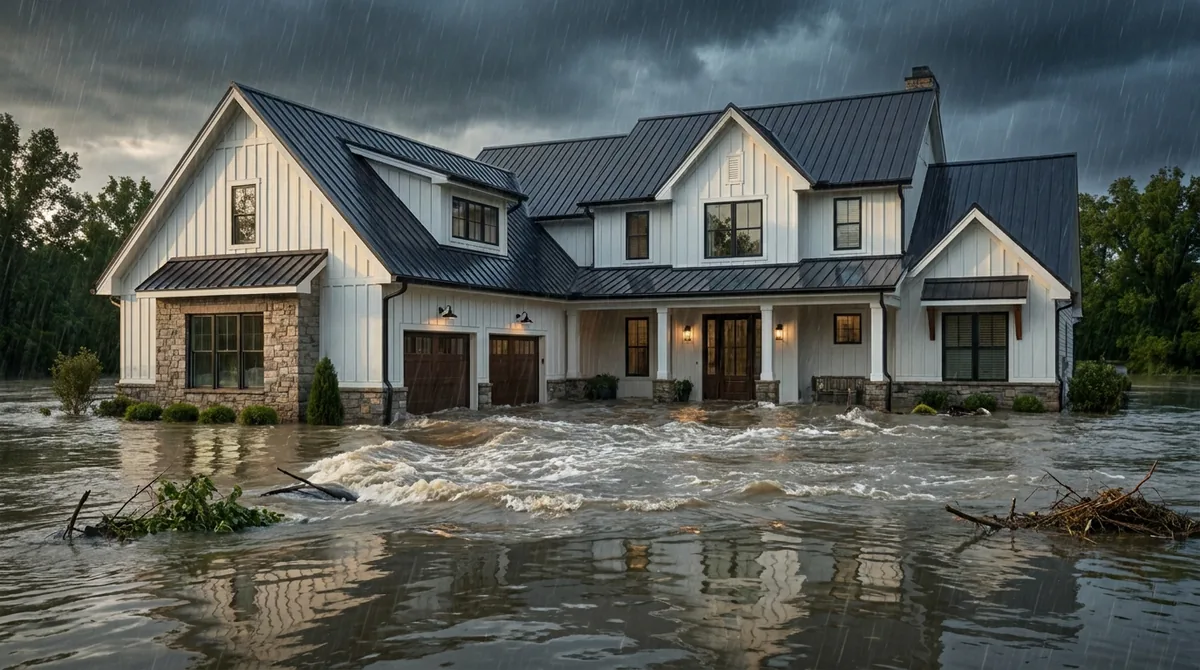
Floodwater rising near a Minnesota home
Home / Flood Insurance

Minnesota Flood Insurance: The coverage your home policy leaves out.

Your homeowners or renters policy won't pay a flood claim. Minnesota even requires your insurer to tell you so every year. We'll help you price NFIP and private flood for your address, from river towns to the suburbs.

$250K
NFIP Building Max
30 Days
NFIP Waiting Period
$25K
Damage From 1 Inch Of Water
Free
Coverage Review With A Local Agent
The Quick Answer

Homeowners and renters insurance do not cover flood. Minnesota law (Minn. Stat. 65A.302) requires insurers to send an annual notice saying exactly that. Rising water from rivers, lakes, snowmelt, or heavy rain needs a separate policy through the National Flood Insurance Program (NFIP) or a private flood insurer. NFIP limits are $250,000 for the building and $100,000 for contents, with a typical 30-day waiting period (exceptions apply, such as coverage tied to a loan closing). A large share of flood claims come from outside high-risk zones, and FEMA estimates one inch of water can cause about $25,000 of damage. Spring snowmelt pushes the Mississippi and Minnesota Rivers up, and sewer or drain backup is not flood; it needs its own endorsement. Block Agency, a Farmers Insurance® agency in Eagan, quotes flood coverage free at (651) 252-6655.

Home policy pays
$0 for flood
NFIP limits
$250k building / $100k contents
Waiting period
Typically 30 days
Free quotes
(651) 252-6655
Minnesota Flood Insurance, The Short Version

The coverage most Twin Cities homes don't have. Yet.

Here is the sentence that surprises almost everyone, so we will put it first: your homeowners policy pays nothing for flood damage. Not a reduced amount. Nothing. Rising water from a river, a lake, spring snowmelt, or a storm that overwhelms the drainage is excluded from standard home and renters policies. Minnesota takes this seriously enough that state law requires your insurer to send you a notice every year saying your policy does not cover flood. Flood coverage is its own policy, through the federal NFIP or a private flood insurer.

The second surprise is who floods. Lenders only require flood insurance in high-risk zones, but a large share of flood claims come from outside those zones. You don't need to live on the riverbank. A stalled summer storm, a fast thaw on frozen ground, or a low spot on the block can put water where it has never been. And FEMA estimates that one inch of water can cause about $25,000 in damage.

Minnesota has seen both kinds of flooding recently. In April 2023, Saint Paul declared a local flood emergency as snowmelt pushed the Mississippi River toward possible major flood stage. In June and July 2024, storms and flooding across southern Minnesota led to a federal major disaster declaration (DR-4797), with Dakota County listed as a contiguous county. Eagan sits between the Mississippi and Minnesota Rivers. The water is closer than most people think.

That is the whole offer here. Block Agency is a local Farmers agency. We'll look up your flood zone, help you weigh NFIP and private flood options, size the building and contents limits to your actual house, and show you how the flood policy fits next to your home policy. We'll also check the gap people confuse with flood: sewer and drain backup. A flooded car, by the way, is an auto policy matter. Call (651) 252-6655 and we'll walk through it. It takes about 15 minutes to get started.


What a flood policy covers. And the three things it never does.

A flood policy is simpler than a homeowners policy — two main coverages plus a code-upgrade helper — but its limits, definitions, and gaps are exactly where claims go sideways. Here is the map.

Building
Up to $250k NFIP

Building Property

The structure itself: foundation, walls, electrical and plumbing systems, furnace and water heater, built-in appliances, and attached fixtures. The NFIP caps this at $250,000; if your home would cost more to rebuild, private flood can go higher. The yard, decks, fences, and landscaping are not covered.

Contents
Up to $100k NFIP

Personal Property

Furniture, clothing, electronics, and the rest of what you own, on its own limit and deductible. The catch: the NFIP pays contents at actual cash value — depreciated worth, not replacement price. Private flood policies often pay replacement cost, which is one of their strongest selling points.

ICC
Up to $30k

Increased Cost of Compliance

If a flood leaves your home substantially damaged, the city can require you to rebuild to current floodplain code: elevated, floodproofed, or relocated. ICC adds up to $30,000 toward exactly those costs, and along Minnesota's river floodplains it is the coverage nobody knows they have.

Definition
Read this one

What Counts as a Flood

The NFIP definition: surface water covering two or more acres of normally dry land, or two or more properties, at least one of them yours. Rising water from a river, a lake, snowmelt runoff, or overwhelmed drainage qualifies. A pipe bursting inside the house does not. That claim belongs to your home policy.

Deductibles
Two of them

Building & Contents Deductibles

A flood policy carries separate deductibles for building and contents, chosen when you buy. Raising them lowers the premium; just pick numbers your savings can actually absorb the week after a flood, when the cleanup crew is also due.

Excess
Above the caps

Excess Flood

For homes that would cost more than $250,000 to rebuild, which describes many homes in Eagan and across the Twin Cities, private flood can stack additional coverage above the NFIP limits, so a serious flood does not stop paying at the cap while the damage keeps going.

Not covered
Living costs

Temporary Housing (NFIP)

The NFIP pays nothing toward rent or hotels while your home is unlivable, a gap that surprises families at the worst time. Some private flood policies add temporary living expense coverage, a real point in their favor and one we look at for every client.

Not covered
Vehicles

Cars & Trucks

A flooded vehicle is not a flood-policy claim. It is covered by the comprehensive coverage on your auto policy, if you carry it. In Minnesota, comprehensive also pays for hail damage and deer collisions, so dropping it to save a few dollars is a bet against the weather.

Not covered
Backup

Sewer & Drain Backup

Water backing up through a floor drain or sewer line is not flood, and a standard home or renters policy doesn't cover it either. It needs its own endorsement on your home policy. In a Minnesota basement during a spring thaw, that endorsement earns its keep.

Do you actually know your flood zone?

Most homeowners are guessing. We will look up your zone, and talk through your real risk. It takes about 15 minutes to get started.

Coverage Basics

The four decisions that actually shape your flood policy.

Flood insurance looks like a commodity until you read two policies side by side. These are the choices that decide what a claim actually pays.

1. NFIP or private, and how we help you choose

The NFIP is the federal program: standardized coverage, capped limits, and federal backing. Private flood insurers compete on what the NFIP lacks: higher limits, replacement cost on contents, temporary living expenses, and in some cases shorter waiting periods.

Neither is “better.” They are better for different houses. Private insurers rate the same property with different models, so the gap between quotes can run in either direction. As a Farmers agency, we can also shop additional carriers when Farmers isn't the right fit, and we'll show you what each option actually covers before you decide.

2. The building limit, and the cap above it

Your building limit should track what it costs to rebuild the house, the same rebuild-cost logic as your homeowners dwelling limit. The NFIP stops at $250,000, and many Twin Cities homes rebuild for more than that. If yours does, a private policy with a higher limit, or an excess layer above the NFIP, keeps the coverage running as far as the damage does.

3. Contents, the coverage everyone skips

Building and contents are separate elections, and skipping contents to save money is the most common flood-policy regret. Watch the settlement basis: the NFIP pays contents at depreciated actual cash value, while many private policies pay replacement cost. On a basement full of furniture, appliances, and electronics after a foot of water, that difference is not academic.

Renters are not exempt from any of this. A landlord's flood policy covers the building, never your belongings. A contents-only flood policy exists for exactly this.

4. Sewer and drain backup, the claim people mistake for flood

Plenty of Minnesota basement water doesn't come from a river. It comes up through a floor drain. When heavy rain or snowmelt overwhelms the sewer system, water can back up into your home. That is not flood under a flood policy, and it is not covered by a standard homeowners or renters policy either. It's an endorsement you add, with its own limit.

If you have a finished basement, this is often the coverage that matters most. We'll check whether you have it, what the limit is, and whether it fits what's down there.

Already have a flood policy? Send it over.

Building limit, contents basis, deductibles, and whether your sewer backup endorsement is really there. We will flag what is exposed and what is fine. No pressure either way.

Minnesota Flood Risk, Honestly

Zones, rivers, snowmelt, and what the map does not tell you.

You have seen the maps and heard the letters. Here is what they actually mean for a home in Eagan or anywhere in the Twin Cities metro.

How the zones work

FEMA maps sort property into zones. A and AE zones face at least a 1 percent annual flood chance, the “100-year” floodplain, which over a 30-year mortgage works out to roughly a 1-in-4 chance of flooding. If your home sits in a high-risk zone and carries a federally backed mortgage, your lender must require flood insurance. Shaded X is moderate risk, unshaded X is lower risk, and neither carries a mandate.

Around here the zones follow the water you already know. Dakota County is bordered by the Mississippi and Minnesota Rivers, and the metro is laced with creeks, lakes, ponds, and storm-water basins. Two streets in the same neighborhood can land in different zones, which is why we look up the actual map for your address instead of guessing from the subdivision.

Spring snowmelt and summer storms

Minnesota floods two ways. The first is slow: a deep snowpack melts and the rivers rise for weeks. In April 2023, Saint Paul declared a local flood emergency as Mississippi River snowmelt flooding headed toward possible major flood stage. The second is fast: a stalled storm dumps more rain than the ground and storm sewers can take. Storms and flooding from June 16 to July 4, 2024 led to a federal major disaster declaration for southern Minnesota (DR-4797), with Dakota County named as a contiguous county.

The mandate map and the risk map are different maps. A large share of flood claims come from outside high-risk zones, from homes where no lender ever required coverage. And because FEMA estimates one inch of water can cause about $25,000 in damage, a “minor” flood is rarely minor on the invoice.

Pricing, waiting periods, and timing

FEMA now prices NFIP policies property by property, based on elevation, distance to water, foundation type, and rebuild cost, rather than by flood zone alone. Zones still control the lender requirement, but not your price.

The bigger timing issue in Minnesota is the 30-day waiting period. If you wait until the river forecast makes the news, the snowmelt crest may arrive before your coverage does. The smart moment to buy is in the fall or winter, before the thaw, not after.

Near a river, a lake, or a low spot on the block?

The 30-day clock favors early buyers. Let us look up your zone and quote your options, no charge and no pitch.

Seven honest ways to lower your flood premium. Without hollowing out the policy.

In flood insurance the two biggest levers are timing and looking at more than one option, because every property is priced on its own. The rest stack on top.

1

Buy before the thaw

NFIP coverage typically takes 30 days to start. In Minnesota, river risk peaks when the snowpack melts, so a policy bought in late March may not be in force for an April crest. Buy in the fall or winter and let the calendar do half the work.

2

Compare NFIP and private flood

The two markets rate the same house with different models, and the gap can run in either direction, with different contents settlement, limits, and living-expense coverage attached. We'll lay the options side by side. Taking whatever renewal shows up unexamined is how flood premiums quietly grow.

3

Ask about assuming the seller's policy

Buying a home that already carries NFIP coverage? The policy can be assumed at closing, which is often cheaper than starting fresh at today's price. Ask before you close; it cannot be reconstructed after.

4

Get an elevation certificate if the lot favors you

Optional for NFIP pricing, but it can help: on a walkout lot that sits well above the water, or a home above the base flood elevation, the survey can lower your premium.

5

Raise the deductibles your savings can cover

Building and contents deductibles are separate elections, and raising them trims the premium. Pick numbers you could actually write checks for the week after a flood, when the cleanup crew, the furnace, and the car may all be due at once.

6

Claim the mitigation credits

Proper flood vents in enclosures, furnaces and utilities moved up out of the lowest floor, and filled-in below-grade spaces can all move the NFIP price. If you are already renovating the basement, an hour of planning can buy a lasting discount.

7

Never let it lapse

Continuous coverage protects your rating history; a lapse can cost you, and re-entry means waiting 30 days you may not have in April. Autopay the flood policy and forget it. This is the one policy where loyalty to the coverage itself pays.

Every flood situation is a different problem. We quote them all.

A river nearby, a closing date, a rental, a finished basement. Each changes how the flood policy should be built.

Under contract, or watching the snowpack?

Tell us the address and we will look up the zone, quote your options, and tell you what would make it cheaper. Straight answer, no obligation.

Flood insurance in Eagan. And across the Twin Cities metro.

Flood risk is property by property here, and two streets in the same neighborhood can sit in different zones. We serve Minnesota and western Wisconsin, and we look at your actual address.

Minnesota flood insurance questions. Straight answers.

Doesn't my homeowners insurance cover flooding?

No. Standard homeowners and renters policies exclude flood: rising surface water and overflow from rivers, lakes, and drainage. Minnesota law requires your insurer to send you a notice every year, titled “Important Information About Damage Caused by Flooding,” saying your policy does not cover it.

The dividing line is where the water came from. A pipe bursting inside the house is sudden internal water damage and belongs to your home policy. Water coming in from outside and rising belongs to a flood policy, and only a flood policy.

Am I required to buy flood insurance?

Only if your home sits in a FEMA high-risk zone and carries a federally backed mortgage. Then the lender must require it, and will.

Outside those zones it is optional, which is the trap: a large share of flood claims come from outside high-risk zones. The mandate map and the risk map are two different maps. We'll quote it either way and let you decide with the number in front of you.

How much does flood insurance cost in Minnesota?

It depends on the property. FEMA prices each NFIP policy on the home's elevation, distance to water, foundation type, and rebuild cost. Lower-risk homes generally pay less; high-risk and previously flooded addresses pay more.

Private flood insurers rate the same house with different models, so a second quote is not a formality. The gap between NFIP and private can run in either direction. We'll help you compare them.

What does an NFIP flood policy cover?

Up to $250,000 for the building (structure, systems, built-in appliances) and up to $100,000 for contents, each with its own deductible. It also includes up to $30,000 of Increased Cost of Compliance toward rebuilding to current floodplain code after substantial damage.

Know the two catches: contents pay at depreciated actual cash value, and the NFIP pays nothing toward temporary housing while your home is unlivable. Private flood policies often improve on both.

NFIP or private flood insurance — which is better?

Better for your house is the only version of that question that matters. The NFIP is standardized and federally backed. Private flood can offer higher limits, replacement cost on contents, temporary living expense coverage, and sometimes a lower price, but private insurers choose their risks and can decline or non-renew.

We'll walk through both for your address. The answer can change at renewal, so ask us for a free renewal review instead of letting the policy ride.

Is there a waiting period for flood insurance?

NFIP policies typically take effect 30 days after purchase. There are exceptions, such as coverage bought in connection with a home loan closing. Private flood policies may use shorter waits.

In Minnesota, the waiting period matters most in spring. If you buy when the river forecast makes the news, the crest may arrive before your coverage does. The time to buy is fall or winter, not April.

I'm not in a flood zone. Do I still need flood insurance?

Everyone is in a flood zone; the question is which one. Zone X means lower risk, not no risk, and a large share of flood claims come from outside high-risk zones. FEMA estimates that one inch of water can cause about $25,000 of damage.

Here is the useful irony: lower-risk zones generally get lower pricing. The addresses where people skip flood coverage are often the ones where it costs the least to carry. Get the quote before deciding it isn't worth it.

Is sewer backup the same as flood?

No, and it's an easy one to mix up. Water that backs up through a floor drain or sewer line is not flood. A flood policy won't pay for it, and a standard homeowners or renters policy won't either.

Sewer and drain backup coverage is a separate endorsement you add to your home or renters policy, with its own limit. If you have a finished basement, ask about it before the spring thaw.

Will FEMA disaster assistance cover me if I skip flood insurance?

Not meaningfully. Federal assistance requires a presidential disaster declaration, much of it arrives as loans that must be repaid, and grants are typically a small fraction of real repair costs.

In the June–July 2024 southern Minnesota flooding disaster (DR-4797), Dakota County was listed as a contiguous county, which made it eligible for economic-injury loans only. Most floods never trigger a declaration at all. Assistance is a safety net, not a substitute for coverage.

Does flood insurance cover my car or temporary housing?

No on both, under the NFIP. A flooded vehicle is a comprehensive claim on your auto policy. In Minnesota, comprehensive also covers hail damage and deer collisions, so think twice before dropping it.

The NFIP pays nothing toward rent or hotels while your home is unlivable. Some private flood policies add temporary living expense coverage, which is a real point in their favor.

Can a flood policy transfer when a home is sold?

Yes. An NFIP policy can be assumed by the buyer at closing. On a home that has carried flood coverage for years, assuming the existing policy can beat starting a new one at today's price.

It has to be arranged before closing, not reconstructed after. If you're buying anywhere near a river, a lake, or a low spot, put “can I assume the flood policy?” on the checklist next to the inspection.

Why does my insurer send me a flood notice every year?

Minnesota law (Minn. Stat. 65A.302) requires insurers to give policyholders an annual notice titled “Important Information About Damage Caused by Flooding,” stating that the policy does not cover flood. The notice is a legal requirement, not a change to your coverage.

It's a reminder that flood is a separate purchase. If you've been filing that notice away unread, call us and we'll talk through whether a flood policy makes sense for your address.

Still have questions? Call (651) 252-6655. We will give you a straight answer.

Find out what your flood risk really costs to cover.
Free, fast, and in plain English.

Tell us the address. We will look up the zone, walk through NFIP and private options, and work toward real numbers. It takes about 15 minutes to get started.